
Winter Contingency Shelter: More Than Safety from the Cold
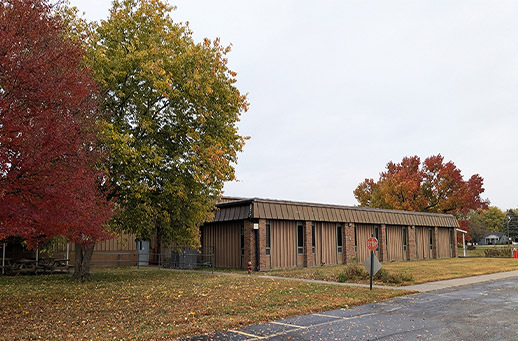
“When winter hits, housing goes into what we call winter contingency — meaning we don’t want anyone outside during those frigid temperatures because it could cause loss of life and/or dismemberment,” says Aspire Director of Housing Services Kathleen Bowers.
This December, for the second year Aspire Indiana Health is coordinating the operations and services provided in a temporary winter contingency shelter for Indianapolis residents at risk for being unhoused in the coldest months of the year. The shelter will be open from December 1, 2025, through March 31, 2026, and will serve as a family overflow shelter with room for up to 160 people.
“Number one is to provide shelter and get people out of the cold,” Bowers says. “The second step is to break the cycle.”
Providing Resources and Stability
The plan for the winter shelter is being coordinated by the Office of Public Health and Safety (OPHS) in partnership with Indianapolis Continuum of Care Network (CoC), community shelter providers, public safety agencies and transportation partners.
Being a whole healthcare provider, Aspire is uniquely positioned to provide more in-depth support to the individuals and families in the winter contingency shelter. Providing a stable shelter is just the first step.
“Stability is working on behavioral health and employment, and finding a primary care physician,” Bowers says. There is intentional focus on making sure the children in the shelter are getting to school along with providing families with the resources to get them into stable housing after the shelter.
Lessons Learned, Plans Made
Last year’s winter contingency shelter provided many lessons learned going into winter this season. “We found the most success last year with the services that were brought directly to the residents at the shelter,” Bowers explains.
“Aspire demonstrated that a health center is positioned to operate a shelter. We have the expertise and partnerships to help connect people to the services and resources they need,” says Aspire Vice President of Social Impact Mike Keevin. “Having a trained workforce helped to de-escalate tension in the shelter. That led to fewer calls to EMS and local law enforcement.”
The staff operating the shelter is made up primarily of Aspire team members, trained in trauma-informed care and motivational interviewing. Having a large variety of speciality services cultivates a well-rounded environment for those families at the shelter to receive services and resources.
With that historical knowledge in mind, Aspire’s behavioral health, medical and recovery services have curated a comprehensive plan to bring their services to the residents at the winter contingency shelter directly.
“Everyone has been on board with helping the winter contingency shelter come together,” Bowers says. “It truly is ONE Aspire and has taken nearly all our departments to make it come together and tear down barriers to service the people.”
One major shift this year in operations is how behavioral healthcare will be provided. A challenge in the past was figuring out how to get individuals to the health center to do the intake process. This year, Aspire’s housing and behavioral health teams have worked together to develop a process to bring behavioral health to the shelter directly, which will greatly reduce barriers to residents receiving the behavioral healthcare they may need.
Wrapping Around Families with Services
Last year, the winter contingency shelter was operational for 106 days, serving 61 families. This year, the shelter will be open for 121 days, starting December 1, anticipating at least 60 unique families. The goal is to keep people alive so the barriers for entrance are low.
“You don’t have to be sober to come in. We aren’t drug screening,” Bowers says. “We will make sure the family and women’s shelter is safe, but otherwise it is very open.” This allows families to stay together.
One family in particular stands out from last year.
“We helped both this woman and her husband find jobs about a month before the shelter shut down and helped find them a temporary unit so they could save money,” Bowers says. “After a month or so, they had created a budget, and we helped them with the security deposit with some donated dollars, and they were able to get their own place.”
“We’re a healthcare agency that can connect people to the resources they need,” Keevin says. “We’ve got our own internal resources to be able to do this. Aspire has a diverse skill set that is needed to operate a winter contingency shelter. Not only do we have expertise in healthcare, but we’re managing the logistics of sending out laundry, serving meals and managing inventory. I’m really proud of the team that we’re able to do this.”