
The Story of the HIV Wreath
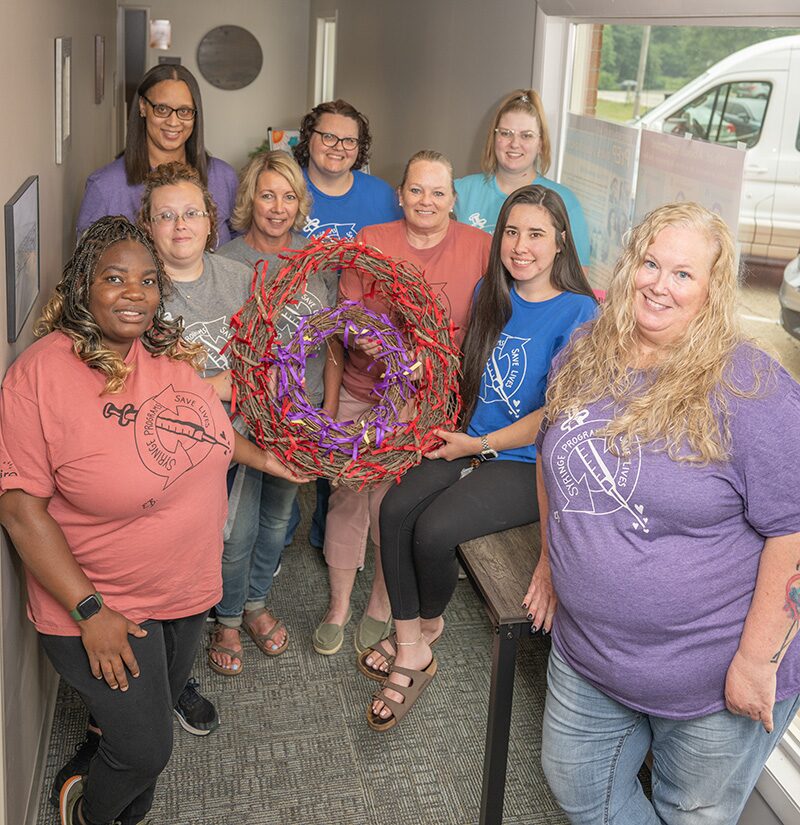
Decorating one of the walls in the Hoak health center where Aspire Indiana Health’s infectious disease team meets, there is a charming wreath that tells the stories of the people who have lost their lives to HIV.
The wreath made its first appearance in 2010 for the anniversary of the HIV Care Coordination program (now known as Infectious Disease Services) courtesy of director Julie Foltz. In a company that cares for people living with this infection, losing a life takes a toll on an individual and their work.
With this wreath, you can see all of the red ribbons tied around it with names written on them. Each of them represents a person that Aspire has served who has passed away. Memorializing these people gives a visual understanding of the devastating impact of this disease – not only on family and friends, but their caregivers as well.
To continue the legacy of the red ribbon wreath, there was an addition that started in 2021. There is a smaller wreath with yellow and purple ribbons tied to it to represent those that have died from Hepatitis C and overdose, respectively.
“Staff members, participants in the Madison County Harm Reduction (HARP) program and individuals we met at recovery events over the years contributed these names to the wreath,” Foltz says. “The impact that others have on our lives is significant and stays with us through not only the wreath, but lasting memories and time spent with these individuals who have lost their lives.”
With this addition to the original wreath, we can prolong its legacy and the many lives it represents for years to come. As science progresses and treatments expand, the hope is always to cure the infection known as HIV. Until we can find that cure, we look toward a future where there is finally an HIV free generation.
The need for these services in the Madison community and beyond is evident by an increased volume in HARP activity. Last month they experienced their busiest day ever with 46 participants, including six new people and five returning after an absence of more than a year. Eight HIV tests were completed and 83 Narcan doses handed out – all in one day.
We thank those who have dedicated their lives to research and care, in addition to family and friends who stood with those who have lived with HIV. We commemorate them and will keep remembering those whose lives have been lost for many years to come, not just for the infection but also for the full lives they led and the individuals they were.