

National Health Center Week: Celebrating 60 Years of Progress
Every August, National Health Center Week brings more awareness to America’s nearly 1,500 Community Health Centers (CHC), highlighting the commitment and passion of staff, board members and supporters who make it possible to provide quality, comprehensive healthcare services to more than 32.5 million patients across nearly 16,000 communities each year.
National Health Center Week takes place August 3-9 and is sponsored by the National Association of Community Health Centers (NACHC). This year’s theme is “Celebrating 60 Years of Progress,” America’s health centers celebrating 60 years of improving our nation’s health. It focuses on empowering communities by connecting them with health centers that serve as places of strength, service and care in their communities.
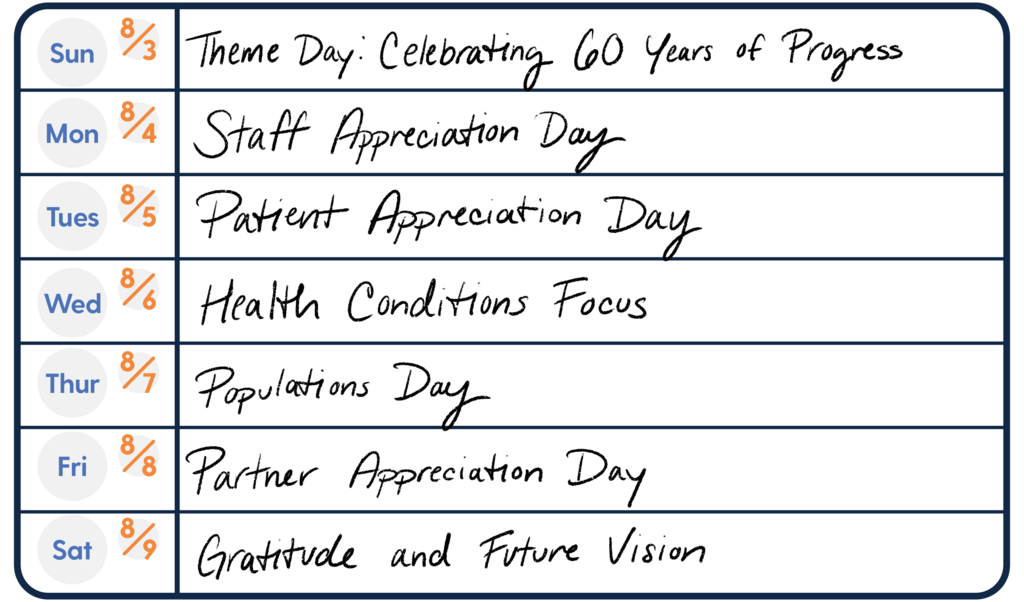
Each day of National Health Center Week is dedicated to a particular focus area:
- Sunday, Aug. 3: Theme Day: Celebrating 60 Years of Progress
- Monday, Aug. 4: Staff Appreciation Day
- Tuesday, Aug. 5: Patient Appreciation Day
- Wednesday, Aug. 6: Health Conditions Focus
- Thursday, Aug. 7: Populations Day
- Friday, Aug. 8: Partner Appreciation Day
- Saturday, Aug. 9: Gratitude and Future Vision
“This week is a celebration of progress, people and purpose,” says Dr. Gina Forrest, Chief People & Public Health Officer at Aspire Indiana Health. “It’s an opportunity to honor our incredible staff, uplift our patients, and recognize the powerful role community health centers play in advancing health equity every day.”
Facts About Community Health Centers
Did You Know… ?
- CHCs Serve 1 in 11 Americans: More than 32.5 million people — across all 50 states, D.C., and U.S. territories — receive care at a CHC.
- The First CHC Was Inspired by the Civil Rights Movement: The very first CHC opened in 1965 in Boston as part of President Lyndon B. Johnson’s “War on Poverty,” grounded in equity and access for all.
- Health Centers Save the U.S. Healthcare System Billions: By focusing on prevention and integrated care, CHCs save the U.S. healthcare system more than $24 billion annually in emergency and specialty costs.
- 70% of CHC Patients Are Living at or Below the Poverty Line: CHCs provide sliding-scale or no-cost services to patients, regardless of their ability to pay — making them a critical lifeline for underserved communities.
- CHCs Go Beyond Clinics: Many health centers offer food pantries, housing navigation, job training, harm reduction, transportation and school-based health services.
- More Than Half of CHC Board Members Are Patients: CHCs are required by law to have at least 51% of board members be current patients — ensuring services reflect community needs.
- Multilingual and Multicultural Care: Community health centers provide care in more than 100 different languages and often have culturally responsive staff, helping to break down barriers to care.
- CHCs Are Major Job Creators: Health centers support more than 250,000 jobs nationwide, from clinical roles to community health workers.
- CHCs Help Close Racial and Ethnic Disparity Gaps: CHCs lead in reducing health disparities among Black, Hispanic/Latino, Indigenous and immigrant populations through accessible, equity-focused care.
- CHCs Respond in Times of Crisis: From COVID-19 to natural disasters and the opioid epidemic, CHCs often serve on the front lines, adapting services quickly to meet urgent needs.
“Community health centers have always been more than just clinics — they are pillars of trust, healing and resilience,” Forrest says. “At Aspire, we don’t just deliver care — we build relationships, restore hope and walk alongside our patients on their journey to wellness.”


