National Health Center Week 2024: Powering Communities Through Caring Connections
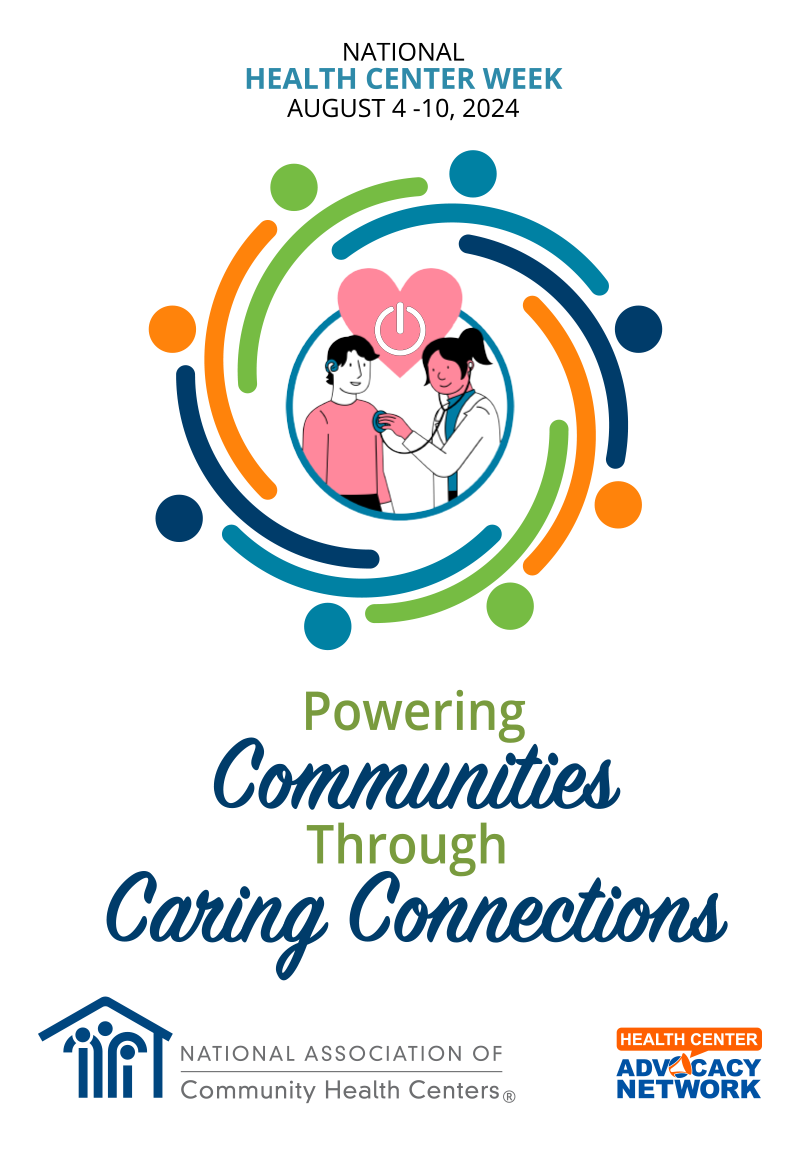
National Health Center Week celebrates and increases awareness of America’s 1,400 Community Health Centers (CHCs) and is an opportunity to highlight the commitment and passion of all those individuals who make it possible to provide quality, comprehensive healthcare services to more than 31.5 million patients across 15,000 communities annually.
This year, National Health Center Week, launched by the National Association of Community Health Centers (NACHC) takes place August 4-10 with a theme of “Powering Communities Through Caring Connections,” focusing on the social drivers of health and addressing healthcare inequities. This theme is woven into different focus days throughout the week.
Sunday, 8/4: Public Health in Housing
Monday, 8/5: Healthcare for People Experiencing Homelessness
Tuesday, 8/6: Agricultural Worker Health
Wednesday, 8/7: Patient Appreciation
Thursday, 8/8: Stakeholder Appreciation
Friday, 8/9: Health Center Staff Appreciation
Saturday, 8/10: Children’s Health
With a mission to make high-quality, affordable care available to everyone, regardless of their ability to pay or insurance status, health centers save lives on the front lines of our nation’s most pressing public health challenges. They are powered by a workforce of nearly 300,000 dedicated professionals who reach beyond the walls of the exam room to not only prevent illness but also address the social drivers that may cause it — climate change, homelessness, substance use disorders, food insecurity and behavioral health.
One of the ways Aspire has reached beyond the walls of the exam room and become part of the communities we serve is through MACY — Mobile Access Care for You — Aspire’s mobile clinic that provides medical visits and assessments, with a focus on addressing medical challenges for those who are unhoused, experiencing mental health challenges and/or substance abuse disorders.
“For many reasons, patients who visit Macy are scared or hesitant or haven’t been able to seek care, and it is amazing to see how they really do come back to access care when it is offered in a way that makes sense for them and meets them where they are, both literally and metaphorically,” says Aspire Primary Care Physician Dr. Olivia Smith. “I think sometimes they feel really judged and rejected by society in many ways, and they are grateful someone showed up to care.”
Federally Qualified Health Center (FQHC) Project Manager Sandia Saunders is part of the Macy care team, and she loves to care for those patients who aren’t otherwise able to get the healthcare they need.
“We target the homeless population or the population with financial struggles,” Saunders says. “Macy is so important to the patients who are unable to receive sufficient healthcare due to transportation, housing or financial challenges. So with Macy, we go to them. We are willing to walk through the homeless camps and meet them where they are.”
Dr. Smith says building trusting relationships with patients is key. It is important to welcome people in a way that is easy and personable and not intimidating.
“Our driver, Mike, is really the first and most important step in that connection, gaining people’s trust and allowing them to see we are here to help,” Dr. Smith says. “Sometimes the most vulnerable populations who are at risk for having the most complications are accessing care only through ER visits. Through Macy, we can get them connected to the care they need, which is huge both for the medical cost savings as well as having the community around them.”
Community Health Worker and Macy Driver Michael Burke says Macy helps get treatment to people who otherwise wouldn’t get it.
“These people we see with Macy — like a patient with a foot infection or another who was pregnant with twins — wouldn’t have been seen by a medical provider otherwise,” he says. “Especially with their lack of transportation, resources and insurance. It’s about getting them care where care is needed. It’s not a one-and-done relationship. The biggest part of it is building relationships with these patients. It’s about their whole health, and we can get them connected.”
“Not only is it important to get our neighbor’s medical needs met, but we can also connect them to other services Aspire offers, such as mental health, employment and housing,” Saunders says. “I believe our presence also offers hope — that they aren’t forgotten, that they matter and that we care about building a relationship with each individual to improve their quality of life. We also can connect people to resources for healthy foods and local exercise programs. We can listen and understand the barriers each individual has that prevents them from attaining a life of substance. We can set goals the individual is comfortable with and help chart a course of action to achieve them.”
“It’s been great to see Aspire be able to connect these patients to practical resources through our Social Impact team for housing, legal and insurance needs because often these barriers are the things preventing them from being able to be healthy, access medications and live a better life,” Dr. Smith says. “I honestly wish we could be available for more than just three days because the need is there and these are some of the nicest, most grateful patients you will ever meet.”