

JayVon Muhammad: Seeing yourself in the work
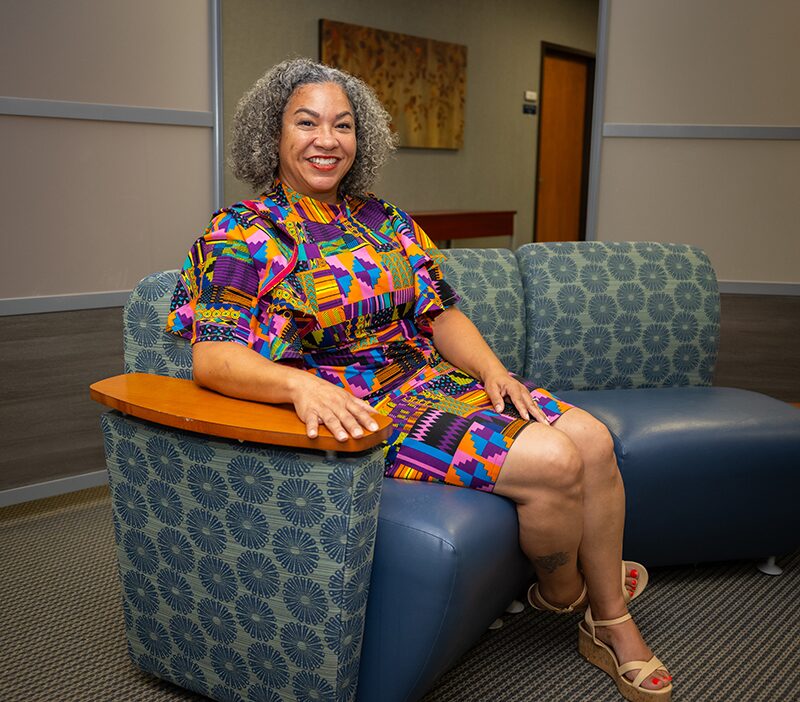
JayVon Muhammad knows she is not the sort of person who could take any sort of job. She has to be able to understand the impact she can have within that organization, and especially the potential to help other people improve their health and happiness.
“I have to see myself in the work,” says Muhammad, who last month joined Aspire Indiana Health as its new Vice President of FQHC Services.
In this role, she will oversee all of the nonprofit’s primary care operations and psychiatric services in four Central Indiana counties: Boone, Hamilton, Madison and Marion. Muhammad is a veteran healthcare executive with a passion for championing underserved populations, including as CEO with a behavioral health provider in the San Francisco Bay area and an FQHC in Lake Charles, La.
In these roles she exhibited bold leadership in pressing to expand or create services the community needed, whether or not they had previously been part of her organization’s core function.
When Louisiana was hit by twin hurricanes, Laura and Delta, in 2020, Muhammad turned their clinic building in north Lake Charles into an ad hoc relief center. Truckloads of supplies, including food, generators and medicine, were brought in to keep the community going. Fraternities, Sororities, community based organizations, and the LSU basketball team came to pitch in.
Even when Hurricane Laura damaged the clinic’s roof – and Muhammad’s own home was heavily damaged – she kept the clinic doors open, slept at the clinic and kept patient services uninterrupted. For this she received the Bob and Leila Macauley Humanitarian Spirit Award from Americares.
After splitting time for more than two years between her hometown of San Francisco and Louisiana, where she met and married her husband, Muhammad was ready for another big change. It meant both of them giving up their respective hometowns and starting a new life somewhere else. Although Indiana wasn’t initially on their minds, one big incentive was Muhammad’s daughter moving to Indianapolis to take a job with the Indiana School for the Deaf.
In Aspire she saw opportunities to bring a continuity of services to people that was not possible in her previous roles: family medicine, mental health therapy, recovery services, housing and employment assistance, and more.
“I want to bring wellness wherever we go,” she says. “Aspire is all about helping people live their best life.”
Muhammad wants to expand these comprehensive services to where they’re needed most, including challenged urban populations and rural healthcare deserts. As someone who wants to be in the community she’s serving, she and her husband bought a house on the Indianapolis Eastside. She plans to bring her passion for urban farming to the neighborhood, has already bought 30 juvenile chickens and talks about setting up a petting zoo for local children.
“We have to be flexible and embrace what it’s like to struggle ,” Muhammad says.
One of her goals for the next few years is to expand dental services to Aspire patients. She notes that many people in recovery experience dental issues that severely impact their quality of life, from what they can eat to self-image to the ability to get a job.
As a midwife who continues to hold that certification, Muhamad also sees a need for more maternity health services and pediatric care She notes that Elwood, where Aspire has one of its oldest health centers, has no prenatal care provider in the area.
By truly embracing a “whole family” approach to healthcare, she says Aspire can expand its outreach to those disconnected from services, especially Hoosiers on Medicaid and Medicare. A woman who comes to Aspire during her pregnancy is likely to keep the child with that provider after it is born, and bring in her domestic partner, other children and family, and serve as a magnet to their community.
“Federally Qualified Health Centers are community gems. They should be pulling in people who are not getting the healthcare and support they need,” she says.
Muhammad plans to spend the next few months not only learning the internal workings of Aspire but reaching out to community leaders and key stakeholders to connect, discovering where the gaps are and finding ways to fill them in. She’s very excited about the mobile clinic unit Aspire will roll out in Indianapolis this fall, thanks to a grant from the city.
“To lead, you need to know when to push,” she says.


