

Aspire Expands Crisis Services with Mobile Crisis Response Team
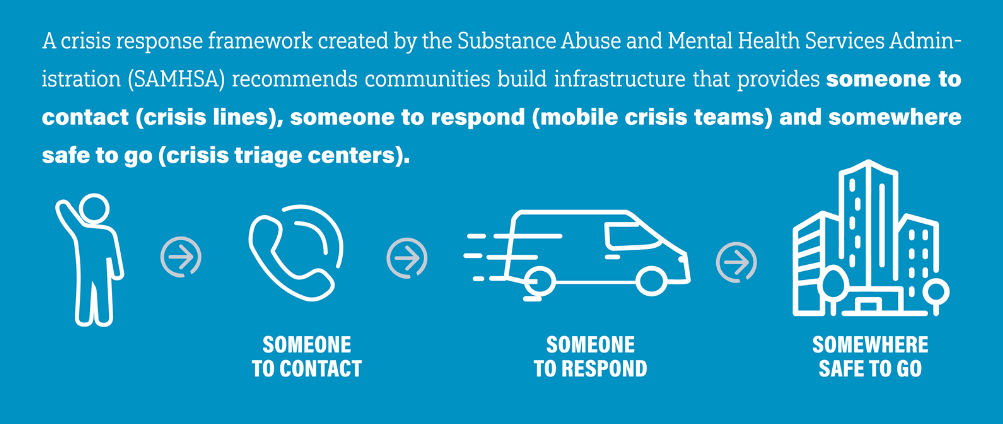
Our Aspire Crisis Services department is expanding our services beyond our traditional telephonic response and is moving toward the Substance Abuse and Mental Health Services Administration’s (SAMHSA) vision of someone to contact, someone to respond and somewhere to go. Earlier this year, Aspire received our mobile crisis designation through the Division of Mental Health and Addiction (DMHA), and we are now available for real-time mobile crisis responses Monday through Friday from 8 a.m.-5 p.m.!
The goal of mobile response is to fill any gaps and not to replace existing supports or services. If an individual is already working with a treatment team, the crisis coordinators will always try to connect with the treatment team first as it is best practice for the treatment team to take lead.
“The crisis department is very lucky to have a great group of individuals who have handled the daytime crisis needs over the years and supported the after-hours crisis line while on call,” says Aspire Director of Service Entry Kaitlyn Ervin. “Everyone who has been a part of either of these teams are the reason our crisis call center has been successful for so long. The team has all voiced excitement about the growth of the crisis continuum and that this is the support for the community they have been waiting for. Without the foundation of our coordination teams, the department wouldn’t have been able to pivot so quickly.”
Aspire’s skilled crisis team is available to offer immediate support, help calm the situation, create a safety plan and offer guidance and further assistance if more intensive care is required. We recognize that when it comes to a behavioral health crisis, it isn’t always a one-size-fits-all approach. That is why we have taken the necessary steps to make sure our crisis continuum focuses on meeting the individual where they are. We have created different pathways and access points to ensure everyone experiencing a crisis will receive the right level of care for their identified crisis when they need it.
Someone to CONTACT
Aspire’s 24-Hour Crisis Line (800) 560-4038 or (317) 574-1252: We answer your calls 24/7/365. We have trained crisis coordinators who will immediately support you and connect you within our continuum as needed. The crisis coordinators provide de-escalation support, safety planning, reviewing of skills being utilized in ongoing treatment, risk and level-of-need assessments, coordination with current treatment teams, coordination and support with first responders and coordination with local hospitals.
988: The 988 Lifeline provides free and confidential emotional support to people in suicidal crisis or emotional distress 24 hours a day, 7 days a week in the United States. For individuals who are Deaf or Hard of Hearing, please text 988 or call 988 Videophone.
Someone to RESPOND: Aspire’s Mobile Crisis Team
What are Mobile Crisis Response Teams (MCRT)?
A two-person, peer-led team who provides community-based crisis services in the location where the individual is experiencing the crisis.
How does MCRT get involved?
The team can only be requested through first responders, 988 or through our crisis line staff determining an in-person response is safe and appropriate. Through a co-response model, we work hand-in-hand with community partners, first responders and social workers when a behavioral health need is identified.
What exactly does the MCRT do?
They provide immediate triage, resources, de-escalation, support and safely planning during a behavioral health crisis. Their services extend beyond the crisis event and include warm handoffs and follow-up care.
Who can the MCRT serve?
All ages. Anyone who is experiencing a behavioral health crisis and needs in-person support.
Somewhere SAFE TO GO: Crisis Triage Centers
In 2023, Aspire was one of 15 organizations in Indiana awarded through the Family and Social Services Administration (FSSA) to provide a regional crisis receiving and stabilization unit. These units, known as Living Room Models, serve people experiencing less acute crises who are voluntary, nonviolent and motivated for help. "These units promote autonomy, respect and hope while drawing from the support of peers." Your local Crisis Line or 988 can assist with information on availability and accessing this resource.
“Aspire, along with many of the other organizations, are actively planning and working on developing these centers to ensure they are best meeting the needs of the community and assisting with filling gaps in care,” Ervin says. “As a part of being a Certified Community Behavioral Health Clinic (CCBHC), we are also actively planning a crisis stabilization unit. There are no specifics on this just yet, but the goal will be a 23-hour unit where individuals can get stabilization support, connection to resources and triage for a higher level of care.”
Indiana 988 Suicide and Crisis Lifeline
The Indiana 988 Suicide and Crisis Lifeline is a direct connection to specialists who are trained in suicide and crisis prevention. The goal of 988 Indiana is to provide quick, competent and nation-leading crisis response services for every Indiana resident.
988 is more than just an easy-to-remember number. It connects you to compassionate, accessible care and support if you or someone you know is experiencing mental health-related distress — whether that is thoughts of suicide, a mental health or substance use crisis or any kind of emotional distress. According to 988indiana.org, “it’s someone who gets you, a listening ear and the nonjudgmental support you need. It’s whatever help you need, when you need it.”
“CCBHC, SAMHSA and 988 all align with the same goal of providing individuals access to someone to call, someone to respond and somewhere safe to go,” Ervin says. “Some of the main goals are access to services, filling gaps in the crisis continuum, reducing ER visits for individuals who can get support elsewhere, and assisting the system in making sure individuals are only going to inpatient when no other less-restrictive service meets the individual’s needs.”
Indiana 988 offers a greater ability to refer Hoosiers in crisis to a network of local crisis specialists who are familiar with the community and better equipped to provide culturally competent support and referrals to local resources and other lifesaving follow-up care. To learn more, visit 988indiana.org.


